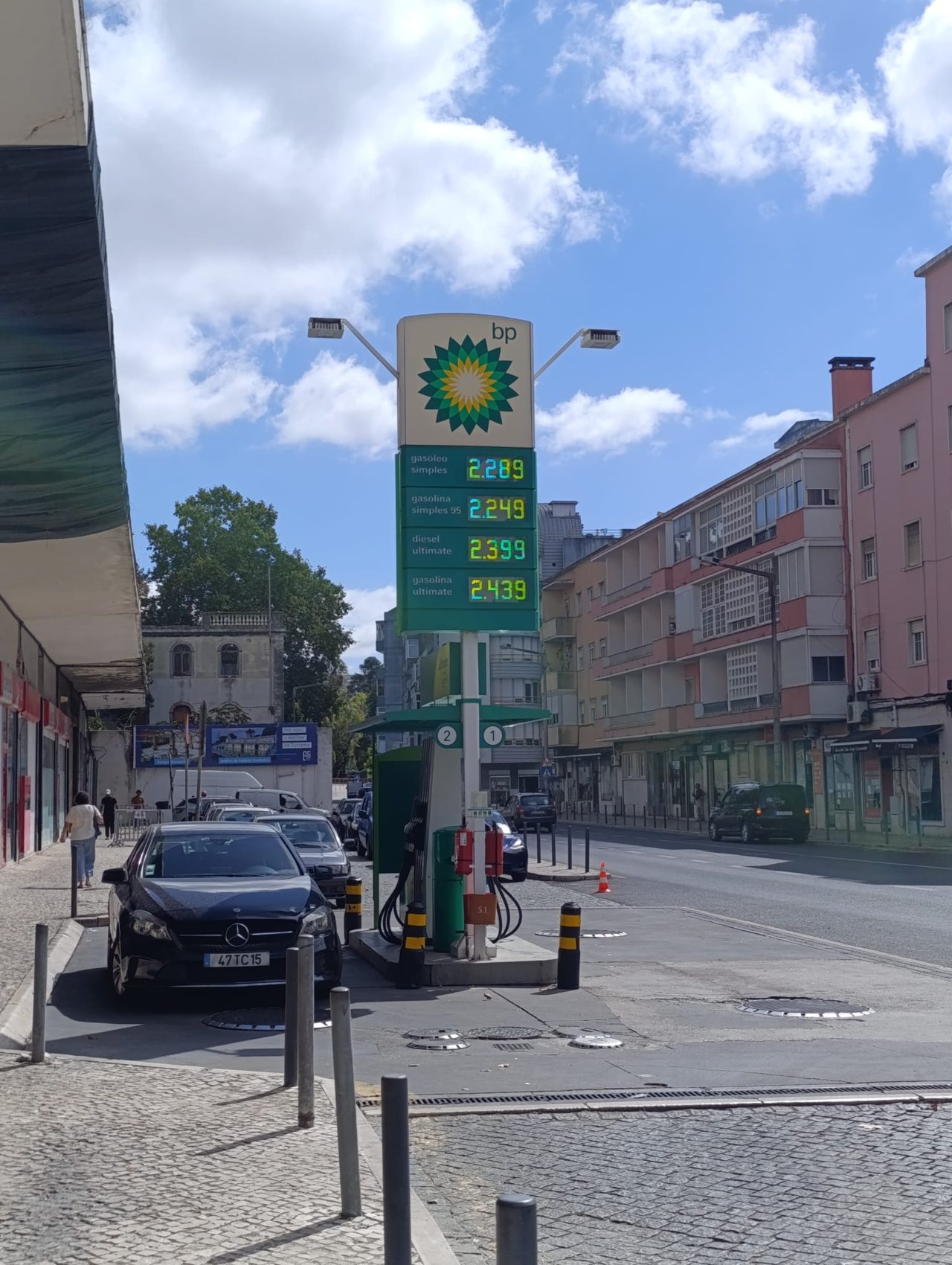
The petrol station whose prices caught my attention. These were the prices at one station, not national averages.
A small petrol station on a Lisbon street caught my eye. Its sign listed ordinary diesel at €2.289 and 95 petrol at €2.249. A little later, I was photographing a latte and an almond cake because the combination felt like such a good deal. I think that is a fairly accurate introduction to how I travel. I enjoy the city, but I also keep looking at the prices and wondering what they mean.
In September 2026, my girlfriend and I spent a week discovering Lisbon, with a day trip north to Porto. We took buses and the metro, walked through neighbourhoods, visited Belém and the maritime museum, and spent an evening at Gulbenkian. Somewhere between the cafés, supermarkets, universities and music, the holiday also became a way of thinking about everyday economic life.
I do not have a complete record of every expense, so this is not a daily budget guide. It is the story of what we noticed. The question that stayed with me was simple enough. When I call a place affordable, affordable for whom?
The petrol station whose prices caught my attention. These were the prices at one station, not national averages.
Our journey began in Ankara on 8 September. After a morning around TED University and Güvenpark, we travelled to Esenboğa Airport. By the evening we had arrived at Lisbon’s Humberto Delgado Airport and taken the metro into the city. The first decisions in a new country are usually very practical. Where is the right platform? Which ticket do we need? How do we get to where we are staying?
Flights and accommodation are the obvious costs of a holiday. Once you arrive, there are dozens of smaller decisions. How far is a neighbourhood from the centre? Do you take a bus, the metro or a car? Do you stop at a supermarket, have a coffee or sit down for a full meal? Each choice involves money, but also time, comfort and the possibility of finding something unexpected.
For me, that is where a trip becomes interesting. A city starts to make sense when I understand a little of how people move through it.
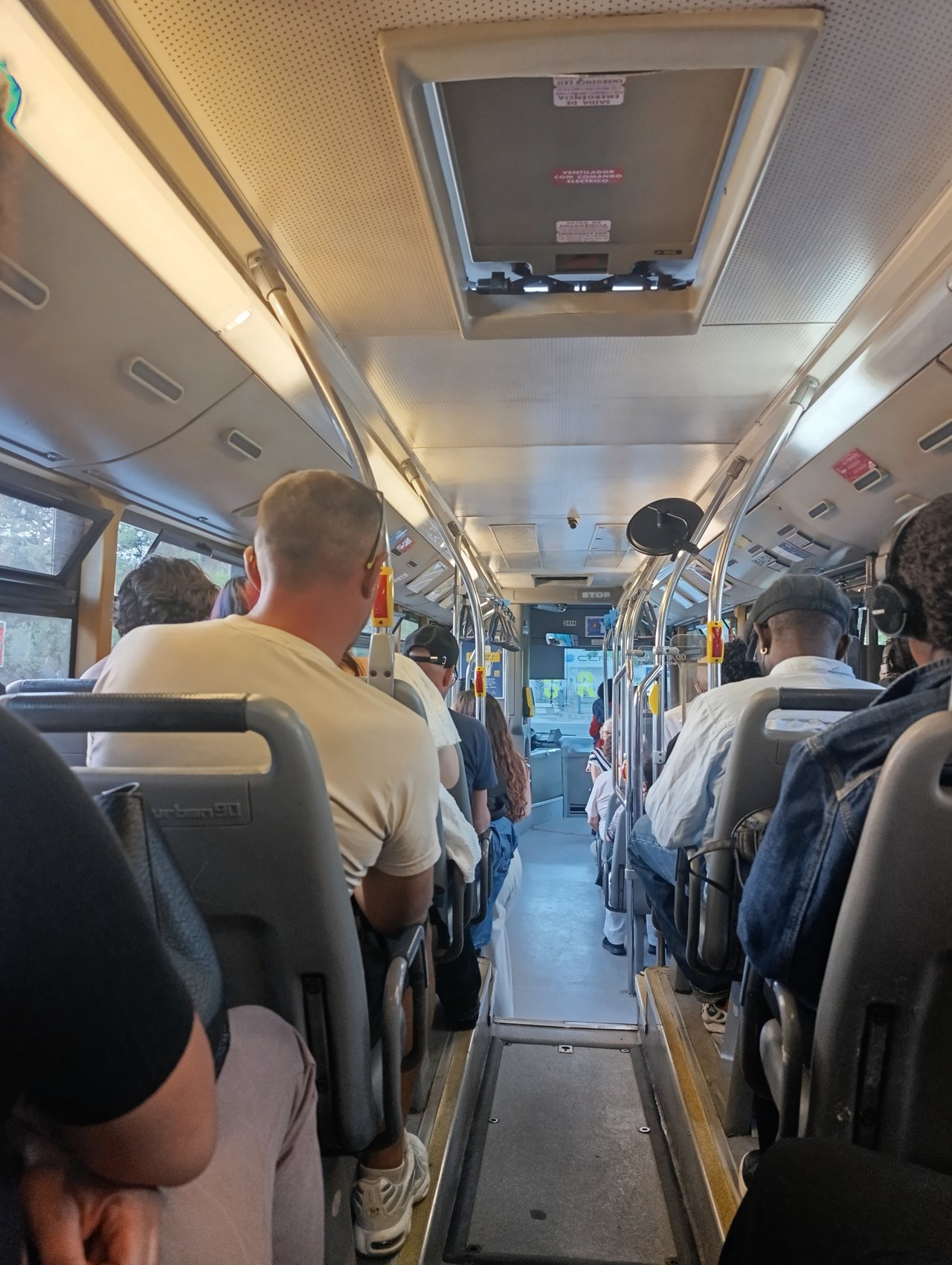
Much of our trip unfolded between stops.
I love taking buses in a new city. Underground trains are useful, but a bus lets me look outside and follow the streets. I can see apartment buildings, shops, traffic lights and the distances between neighbourhoods. Those ordinary things tell me as much about a place as the attractions I came to see.
Our days mixed walking, buses and the metro. We spent time around Fonte Nova and Benfica, travelled through Cidade Universitária and Campo Grande, and went toward Baixa-Chiado and the riverside. I used my Maps timeline to piece parts of the journey together afterwards. It is useful as a reminder, though some entries are estimates and a few transport modes are uncertain.
There is an economic idea in choosing how to move. Walking saves a fare, but takes time and energy, especially in a hilly city. A bus ticket buys distance and a chance to rest. It can also make a neighbourhood accessible that you would otherwise skip. For me, the view from the window was part of what I was paying for.
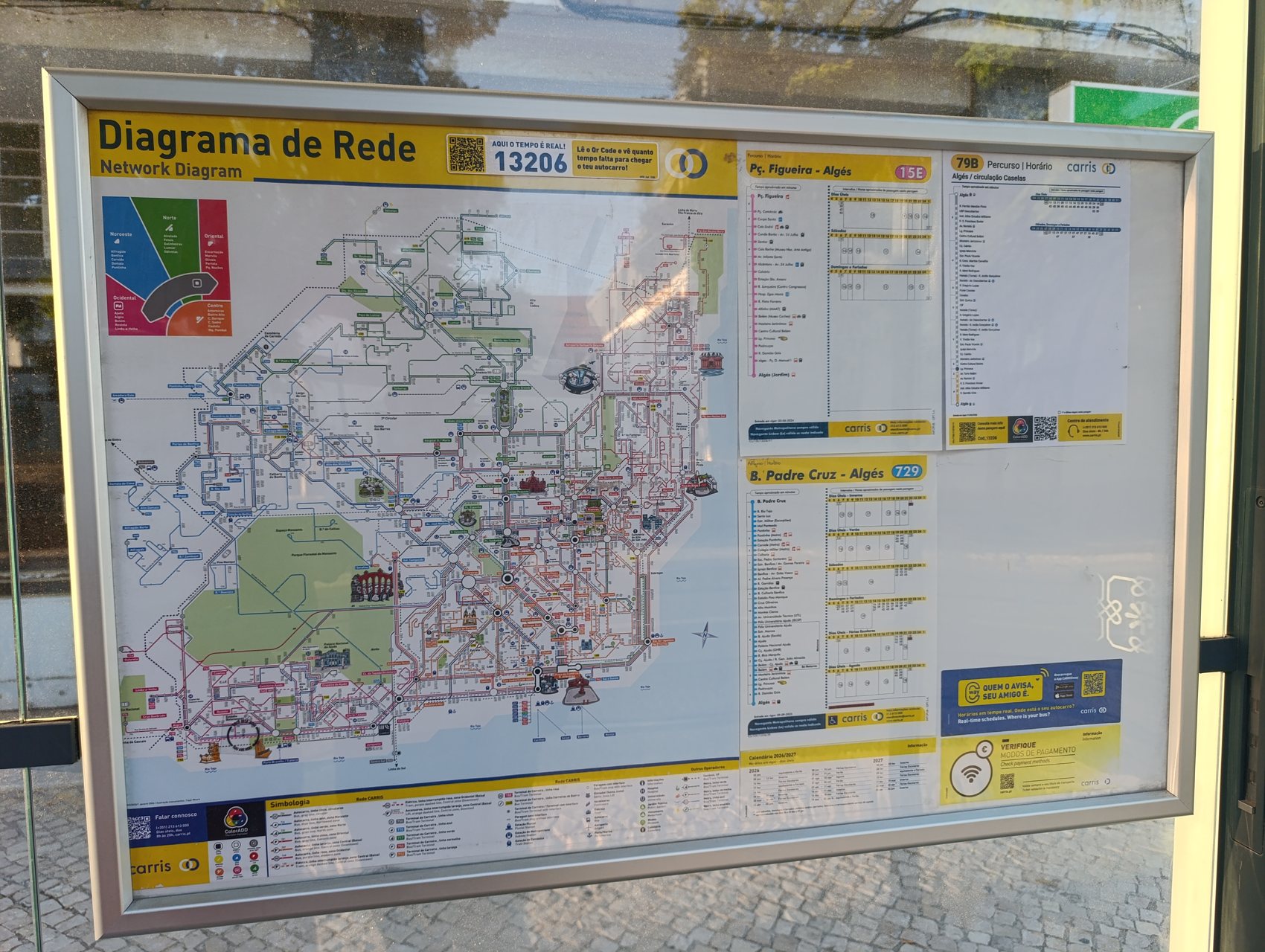
The Carris network map. Behind every easy journey is a system of routes, stops and connections.
Baixa felt different from residential Benfica. There were more visitors and shopfronts, and the architecture made it tempting to keep looking up. I liked moving between the two settings. The city centre belongs to Lisbon, and so do the streets where people buy groceries and catch buses home.
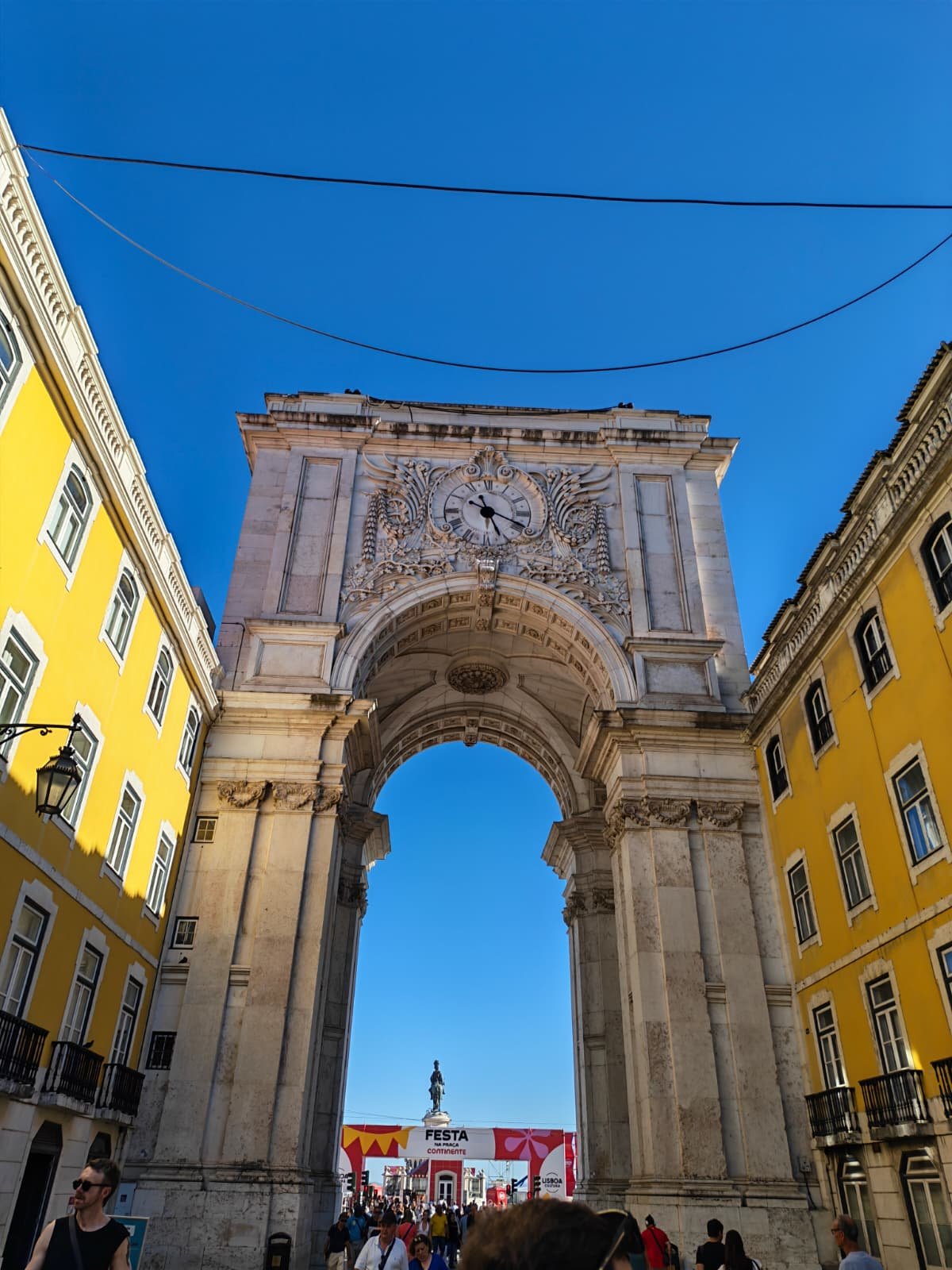
The Rua Augusta Arch at the edge of Lisbon’s rebuilt downtown.
The streets around Baixa carry the history of a disaster. On 1 November 1755, a powerful earthquake struck Lisbon, followed by a tsunami and fires. Much of the city was devastated. Reconstruction under the minister later known as the Marquis of Pombal produced the planned streets and blocks of the Pombaline downtown. The Library of Congress holds an account and images of the destruction .
Walking through the centre today, it is easy to see only the finished architecture. Behind it was a difficult economic problem. Homes, businesses and infrastructure had to be rebuilt. Someone had to decide where people would live, how commerce could resume and who would pay. I find that connection between urban space and public decisions interesting. A street layout can hold the consequences of decisions made centuries earlier.
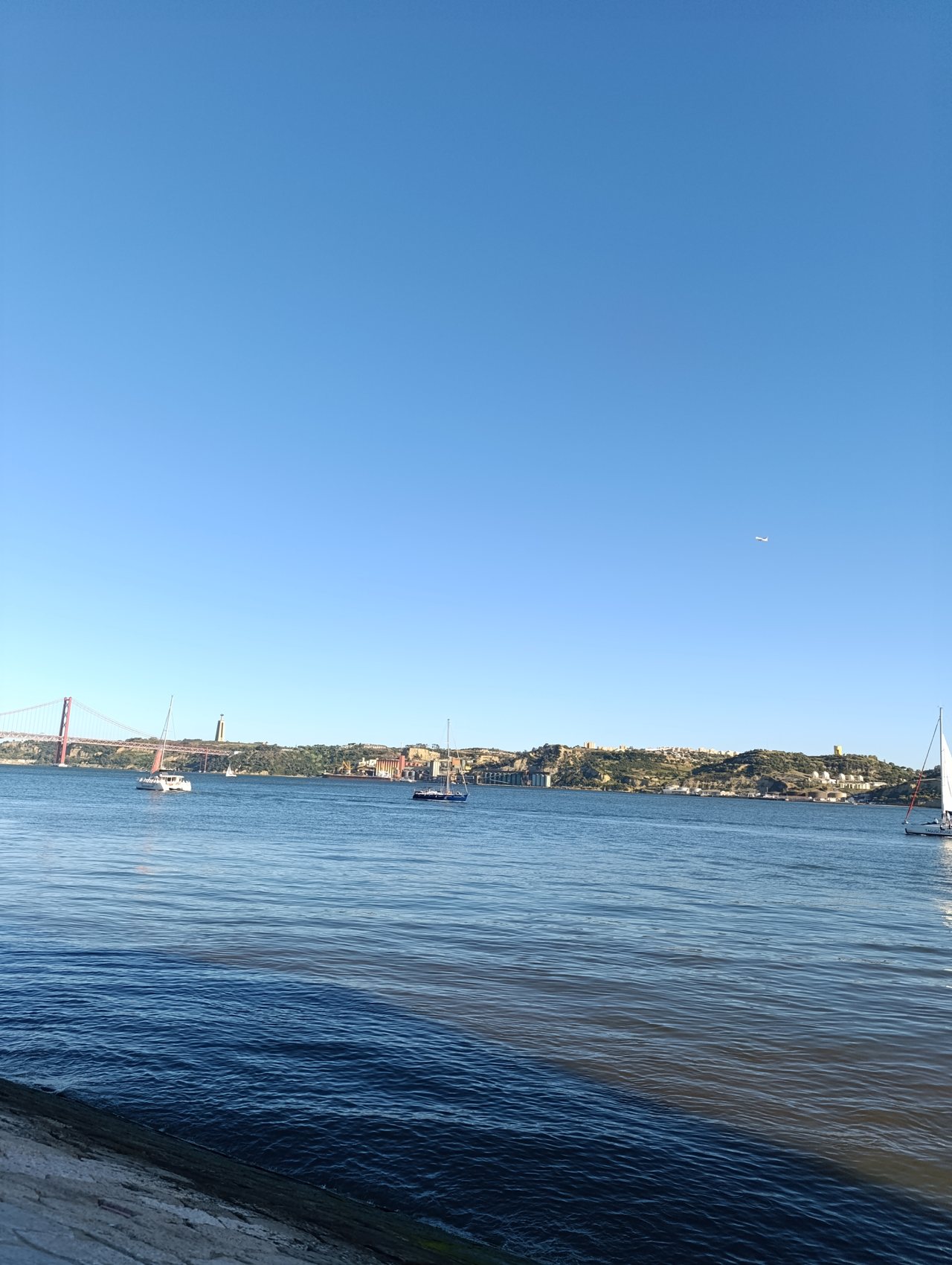
A view across the water during our time in Lisbon.
At Jeronymo, a latte and a small almond cake made enough of an impression that I photographed the tray and sent the picture home. I wrote that the pairing was well known and the prices were very good. It was a modest scene. Coffee, a little cake, a spoon and somewhere to sit. I was happy with it.
A café gives you more than what is on the tray. You can rest, watch the neighbourhood and decide where to go next. The price also pays for the less visible parts of that pause, including rent, ingredients, electricity and wages. A good deal for me still has to be a workable business for someone else.
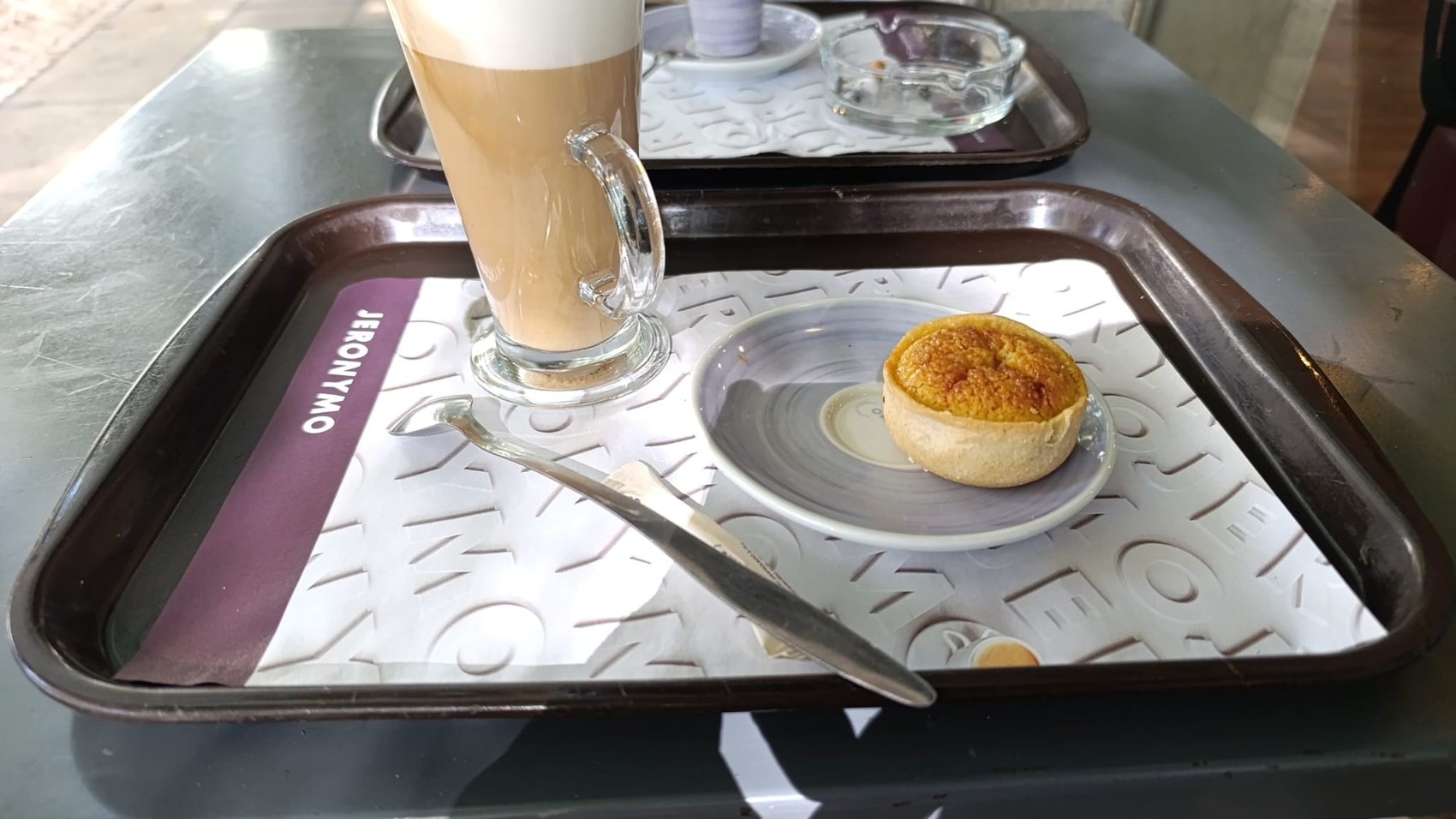
A latte and almond cake at Jeronymo. One of the small moments I wanted to keep.
Another photograph shows coffee and two Portuguese custard tarts. I liked being able to stop without making the whole day revolve around a restaurant reservation. Sometimes the best part of the stop was having nowhere to rush for a little while.
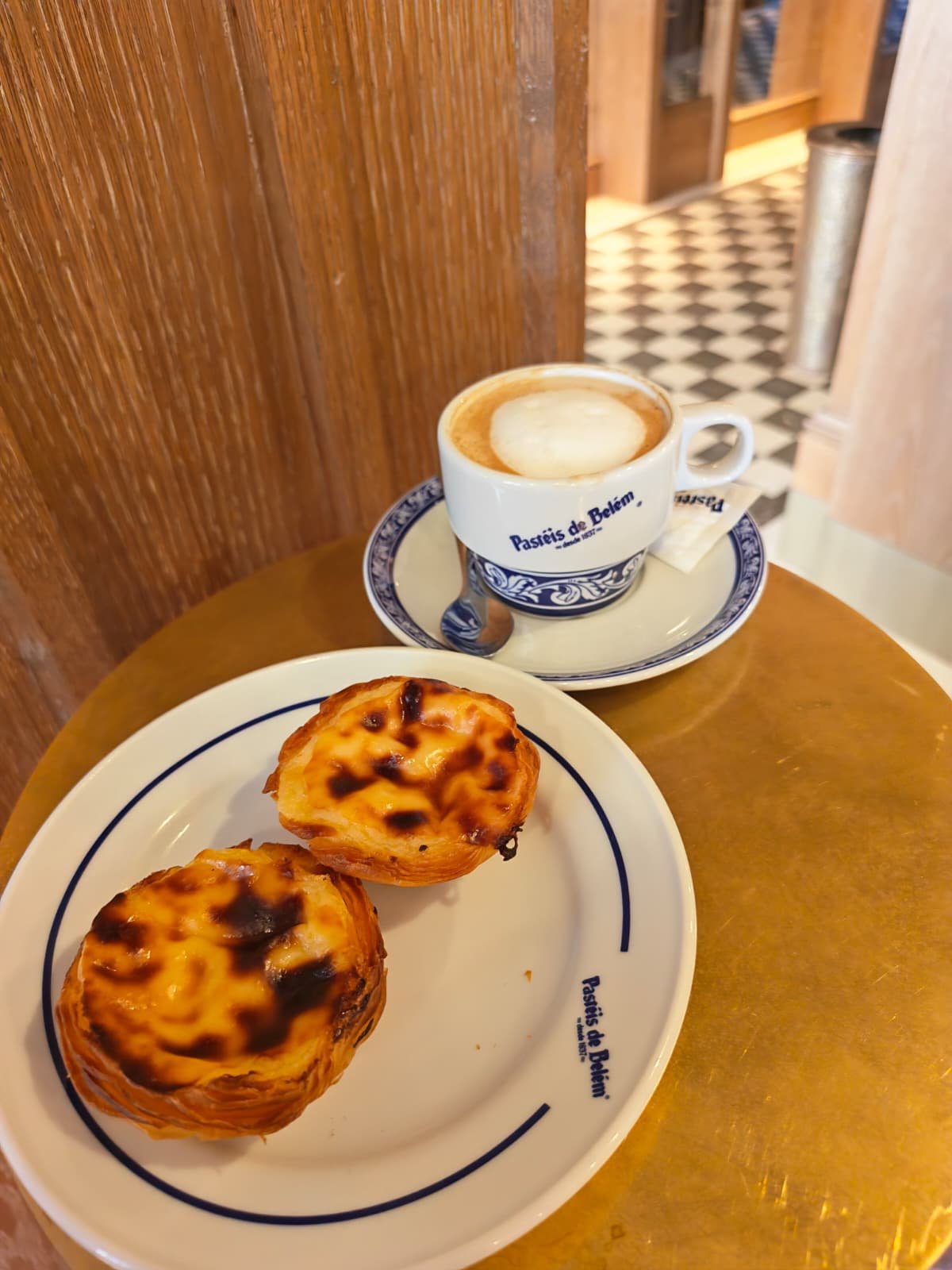
Coffee and pastéis de nata during the trip.
I also enjoy visiting supermarkets abroad. You see familiar brands next to products you do not recognise. You can compare package sizes, look at ready-made food and see what an ordinary shopping trip might involve. Buying a few basics helps control travel spending, but I was also interested in the choices available to people who live there.
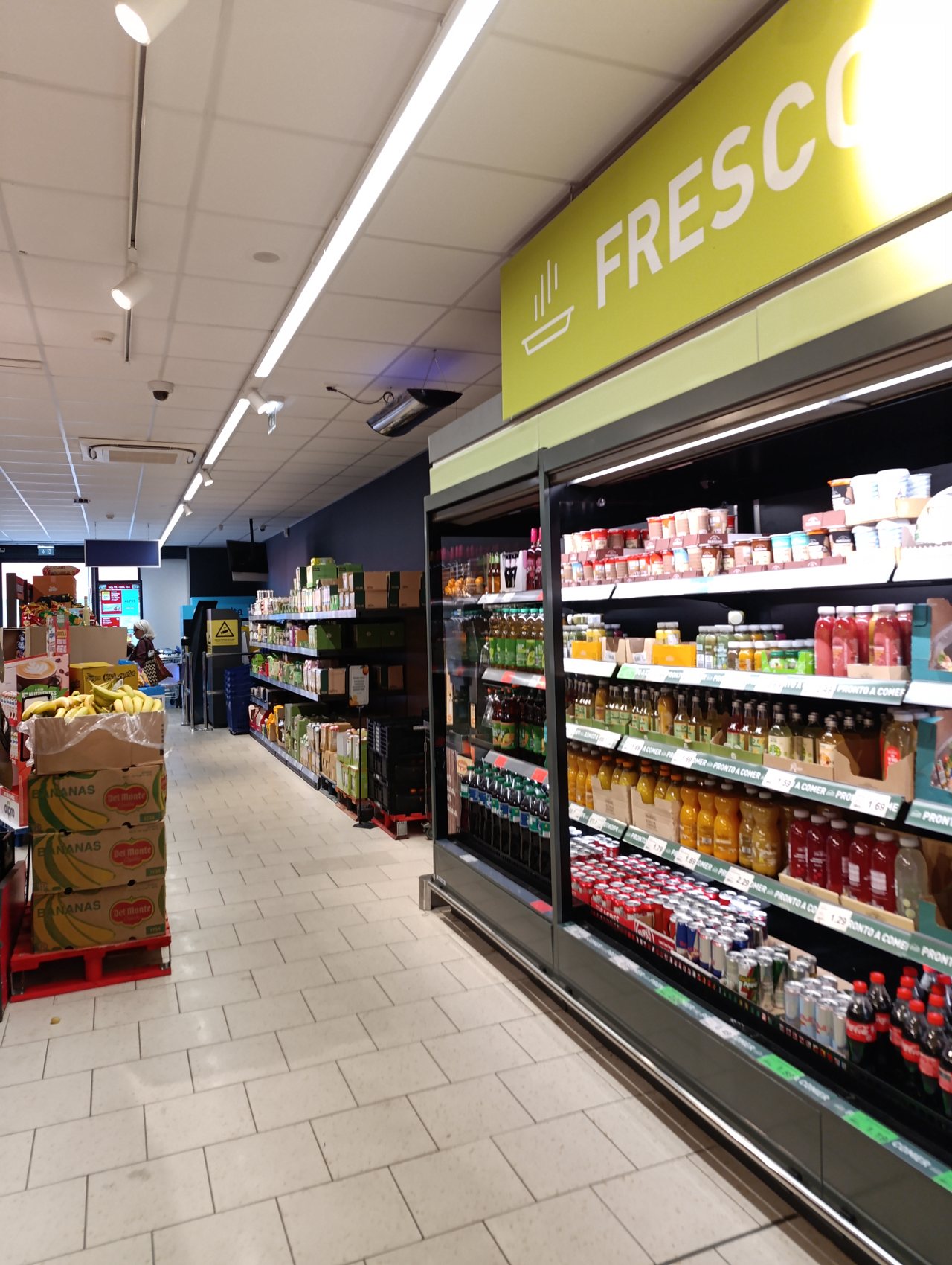
Another way of seeing a country’s everyday economy.
I kept noticing McDonald’s advertising. It seemed to be everywhere I looked. That is an impression from a holiday, not a count of the advertisements in Lisbon, but the familiarity was interesting. Before I knew the neighbourhood’s cafés, I already recognised the golden arches.
That recognition has economic value. In an unfamiliar place, an international chain can offer a fairly predictable experience. A company with a large advertising budget can also stay visible across the city. Local cafés and restaurants compete for the same attention through their location, regular customers, menus and hospitality.
I do not think every meal has to become a political decision. Still, I like asking where our money goes. One coffee is a small purchase. Millions of purchases by residents and visitors help decide which businesses survive and what the streets will look like when we return.
Portugal’s economy is much bigger than the holiday image. It includes services, manufacturing, agriculture and trade. Textiles, footwear, cork products, machinery and automotive components are part of that picture. Firms in these industries face the familiar problems of finding customers, investing and competing on price or quality.
Tourism matters a great deal. Turismo de Portugal’s satellite account estimates that its direct and indirect contribution reached 11.8% of GDP in 2025. Visitor spending also reaches suppliers outside hotels and restaurants. The experience of a traveller and the livelihoods of residents are connected through those purchases.
But a place that feels affordable to a visitor can be difficult to afford on a local salary. Housing is the clearest example of why that distinction matters. The European Commission’s 2026 country report describes continuing pressure on housing affordability and productivity below the EU average. A pleasant café stop tells me something about my afternoon. It cannot tell me what it costs to build a life in Lisbon.
Income, exchange rates and how often someone needs to make a purchase all change the meaning of a price. I think this is the part we too easily leave out when comparing countries. Looking at the euro amount is only the beginning.
The Portugal we travelled through was also shaped by political change within living memory. For decades, the authoritarian Estado Novo, associated with António de Oliveira Salazar and later Marcelo Caetano, restricted political freedoms and maintained a colonial empire. Economic life operated within those political institutions.
The Carnation Revolution on 25 April 1974 ended the dictatorship. The Portuguese parliament’s account of the democratic transition follows the changes that led to the 1976 constitution. Decolonisation, political conflict and changes in ownership and policy made this a complicated economic transition as well. People arriving from former colonies also had to find homes and work.
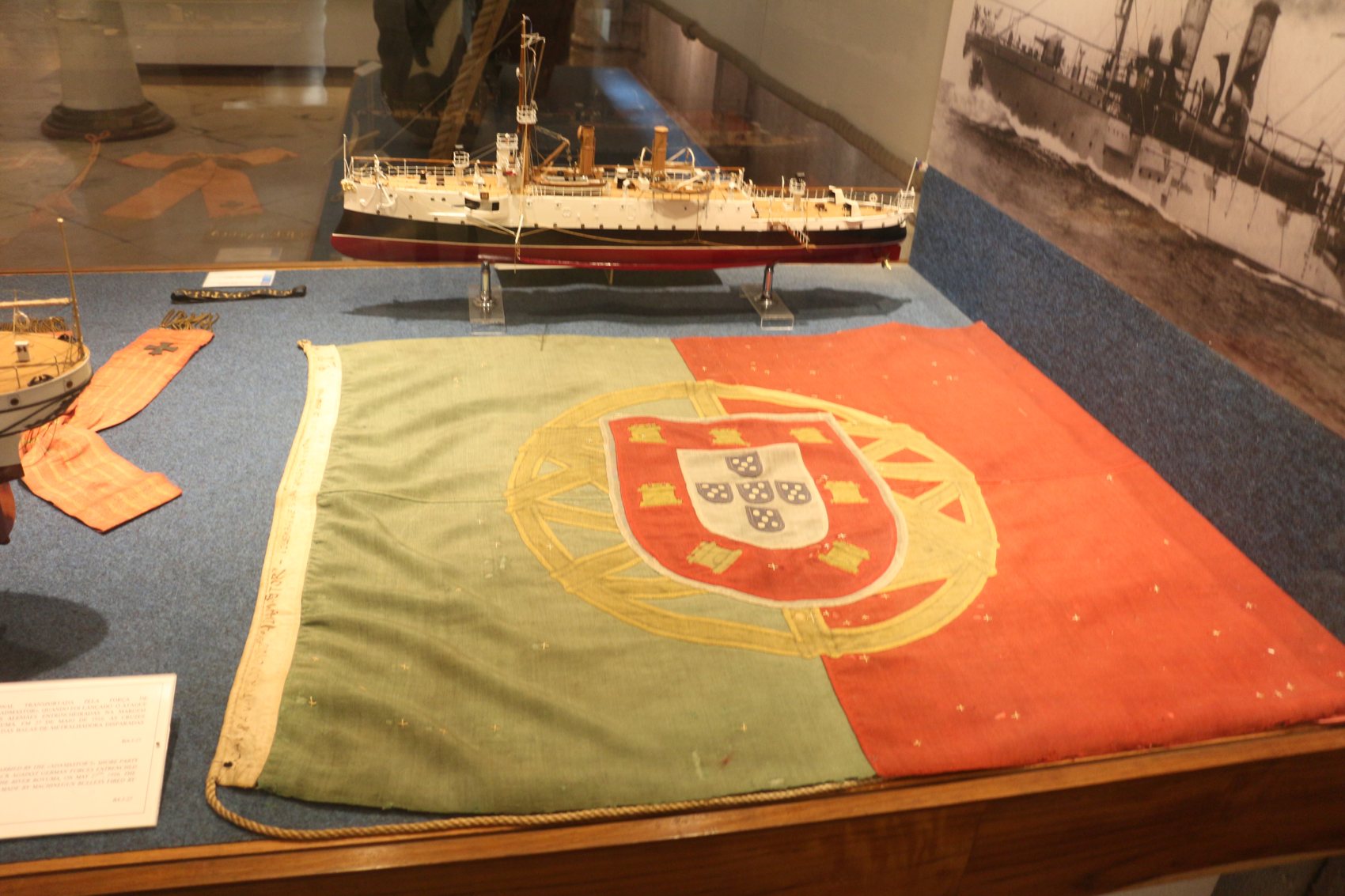
A flag and model vessel at Museu de Marinha. The history behind the displays reaches well beyond the ships themselves.
Portugal joined the European Economic Community in 1986 and the euro area in 1999. Euro notes and coins followed in 2002. European integration opened markets and supported investment, while also exposing firms to more competition. The shared currency makes prices easier to compare. It does not make incomes or living costs the same across countries.
Then came the financial and European debt crises. In 2011, Portugal agreed to an adjustment programme supported by a €78 billion EU–IMF financing package . Fiscal consolidation and reforms were intended to restore stability, but the period also involved recession, unemployment and substantial pressure on households.
By 2025, the Commission reported economic growth of 1.9% and unemployment of 6%. Those national figures are useful context. They still leave room for very different experiences between households. Recovery in the statistics and difficulty in daily life can exist together.
That brings me back to the petrol sign. The €2.289 diesel and €2.249 petrol prices were a snapshot at one station. A photograph taken from inside a coach showed another roadside sign with prices above €2.20. For a visitor taking buses, the numbers were an observation. For someone driving to work or making deliveries, they were a recurring expense.
The timing also mattered. Euronews reported fuel-price protests on 7 September , just before we arrived, including a horn protest on the 25 de Abril Bridge. The prices I photographed were one small part of a much wider issue.
I had written home that petrol was more expensive than in Germany. That was my impression at the time. A proper comparison would need the same fuel type and comparable dates. What I could see was enough to make me think about why transport costs matter so much to households and businesses.
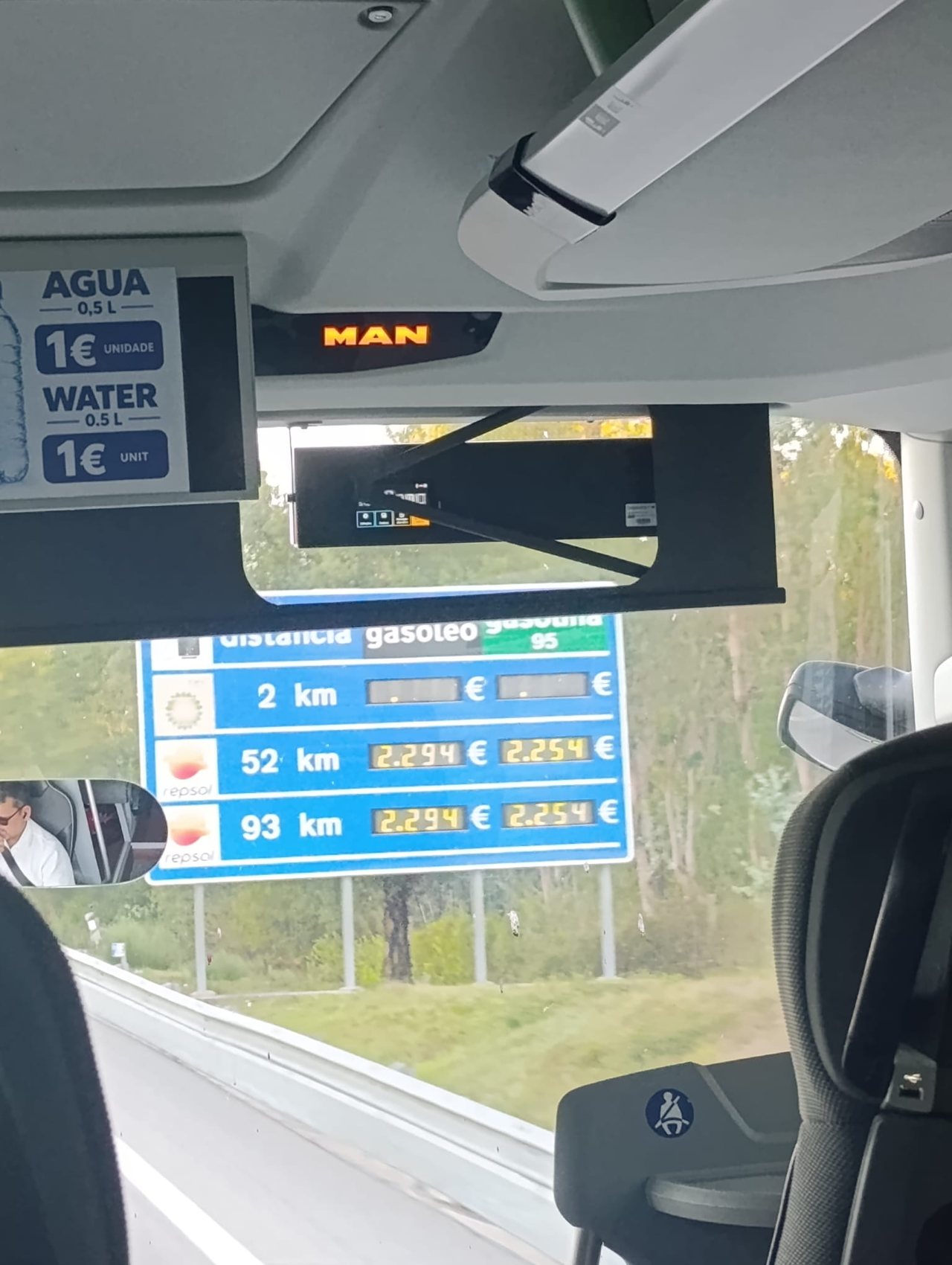
Fuel prices seen from the coach. Another reminder that the cost of a journey extends beyond a ticket.
Travelling through Cidade Universitária reminded me that Lisbon is also a place where people study, teach and do research. The University of Lisbon and NOVA are part of its academic life. I was particularly interested in NOVA School of Law’s library and the quieter work that takes place away from the obvious attractions.
I think a library is an economic institution too. It brings resources together so many people can use them, supports learning and gives research a place to happen. NOVA School of Law describes its physical and digital library resources here . Universities also support housing, transport, cafés and other services around them. Their value spreads beyond the campus.
Phone connectivity was another thing I paid attention to. Maps, timetables, translations and messages home all depend on a connection. I saved some speed tests, including one showing 160 Mbps, but one result cannot describe a country’s network. Location, congestion, device and tariff all affect what someone actually experiences.
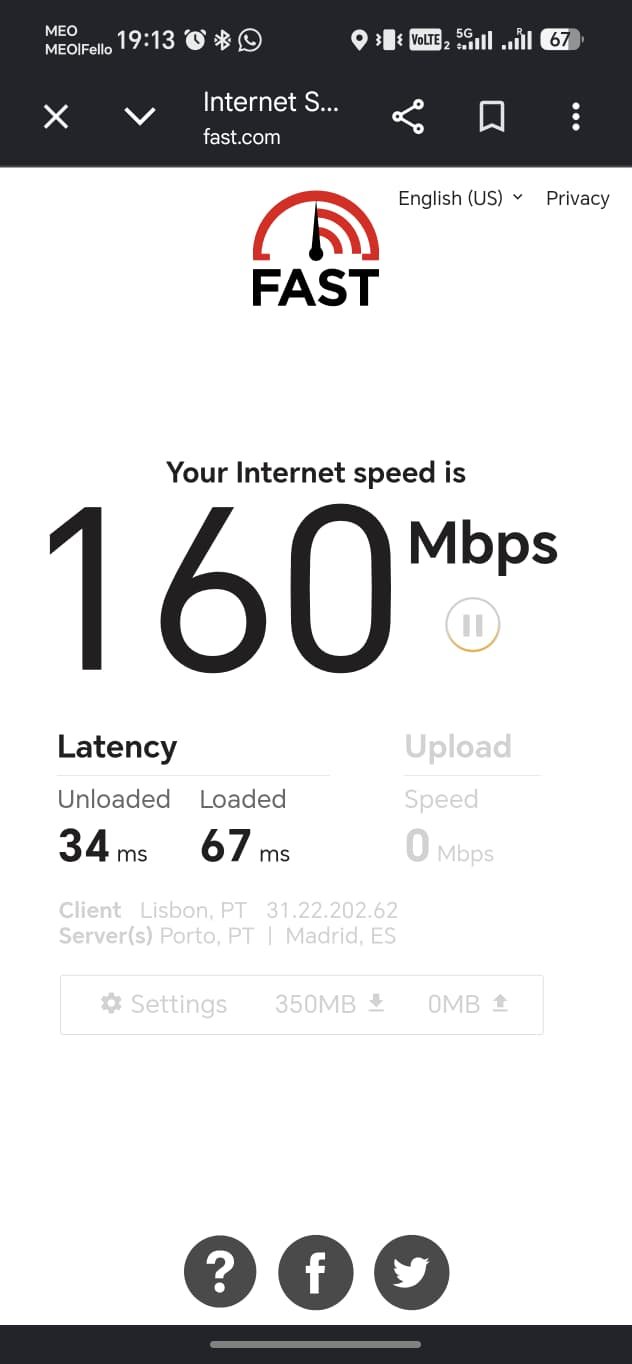
One saved connection test. Useful for that moment, not a nationwide measure of mobile performance.
For eligible students, staff and researchers, eduroam is useful when visiting participating institutions. You can connect with credentials from your home institution. Setting it up before travelling can save time and mobile data. Building access and library access are separate questions, so those arrangements still need checking.
For me, the practical value of connectivity is the uncertainty it removes. I can check a route or send a message without stopping the day to solve another problem. The fastest plan is not automatically the best one for a short visit. A plan that works reliably for what I need is what matters.
On 11 September, we went to the Calouste Gulbenkian Foundation for A Little Summer Suite. Corinna Niemeyer conducted the Gulbenkian Orchestra, with soprano Hila Baggio and violist Timothy Ridout as soloists. The programme brought together Betsy Jolas, Claude Debussy, György Kurtág and Olivier Messiaen.
Our photograph places us close to the orchestra in the Grand Auditorium. A screen above the musicians shows the names from the programme, while a wide window behind the stage opens toward the greenery. After a day of moving around Lisbon, sitting in that room gave the evening a different pace.
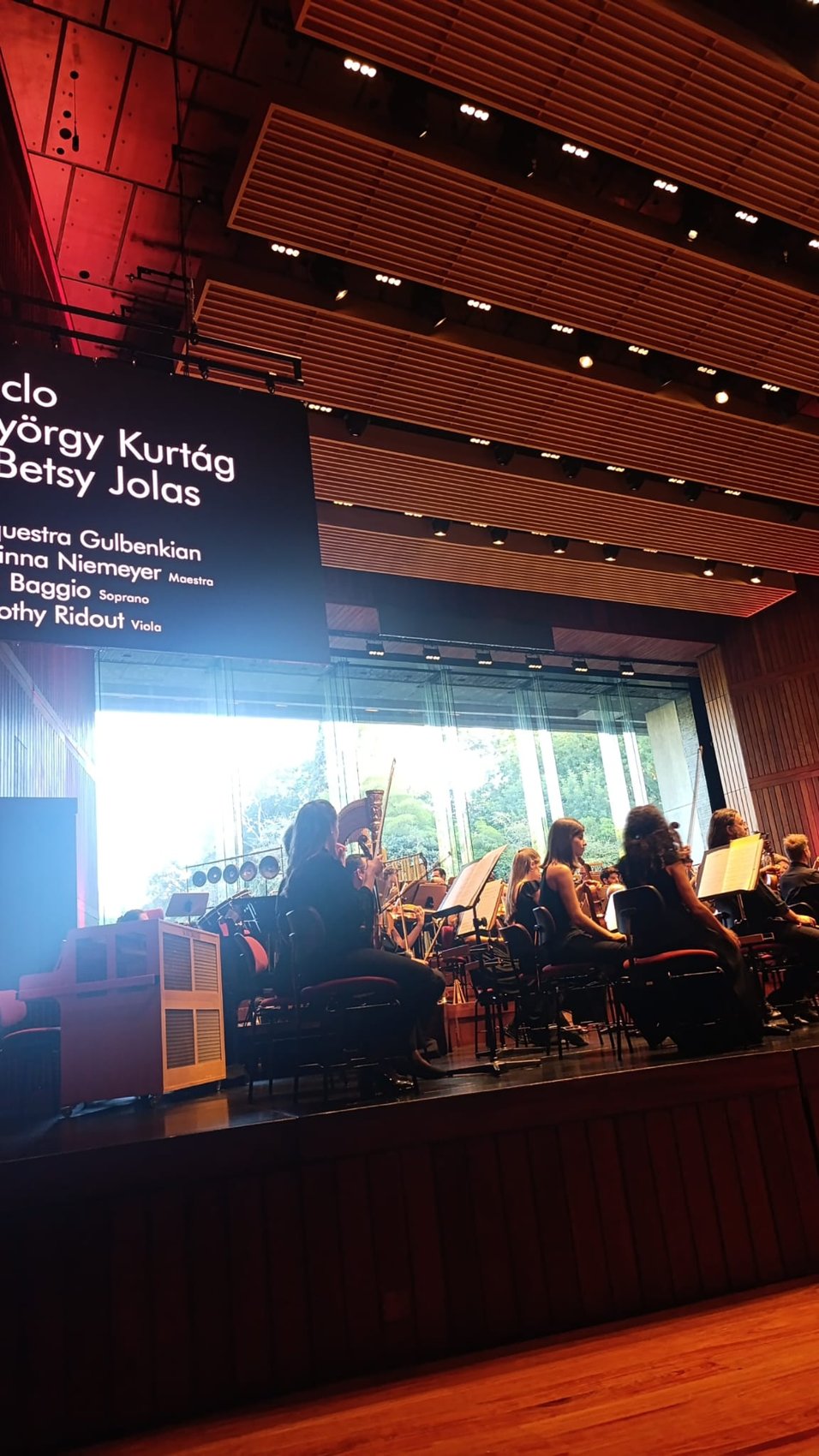
A Little Summer Suite at Gulbenkian, 11 September 2026.
The concert programme began with Jolas’s A Little Summer Suite, followed by Nuages and Fêtes from Debussy’s Nocturnes. Kurtág’s songs on poems by Anna Akhmatova brought the soprano into the evening. After the interval came his movement for viola and orchestra, a movement from Messiaen’s L’Ascension, and Jolas’s Ces belles années….
I liked that the same holiday could include a practical search for an affordable meal and an evening listening to an orchestra. Culture is part of what I want to experience in a city. It gives me a reason to spend time with something I might never have chosen at home.
The foundation’s 2026–27 season catalogue listed this concert as free. That makes a difference to who can attend, but the performance still requires musicians, rehearsals, technical staff and a venue. Funding makes that access possible. I think that is worth remembering when we talk about the value of culture. The ticket price does not measure everything involved.
We walked afterwards. Buses, food, streets, then music. I could not have found the rhythm of that day by calculating its prices alone.
On Saturday, 12 September, we headed north to Porto. It was an early start, followed by arrival around Campanhã, a train into the city, hours of walking and a coach journey back toward Lisbon. The photographs fill in what the timeline cannot. Streets, a meal, the view over the river and the long ride south.
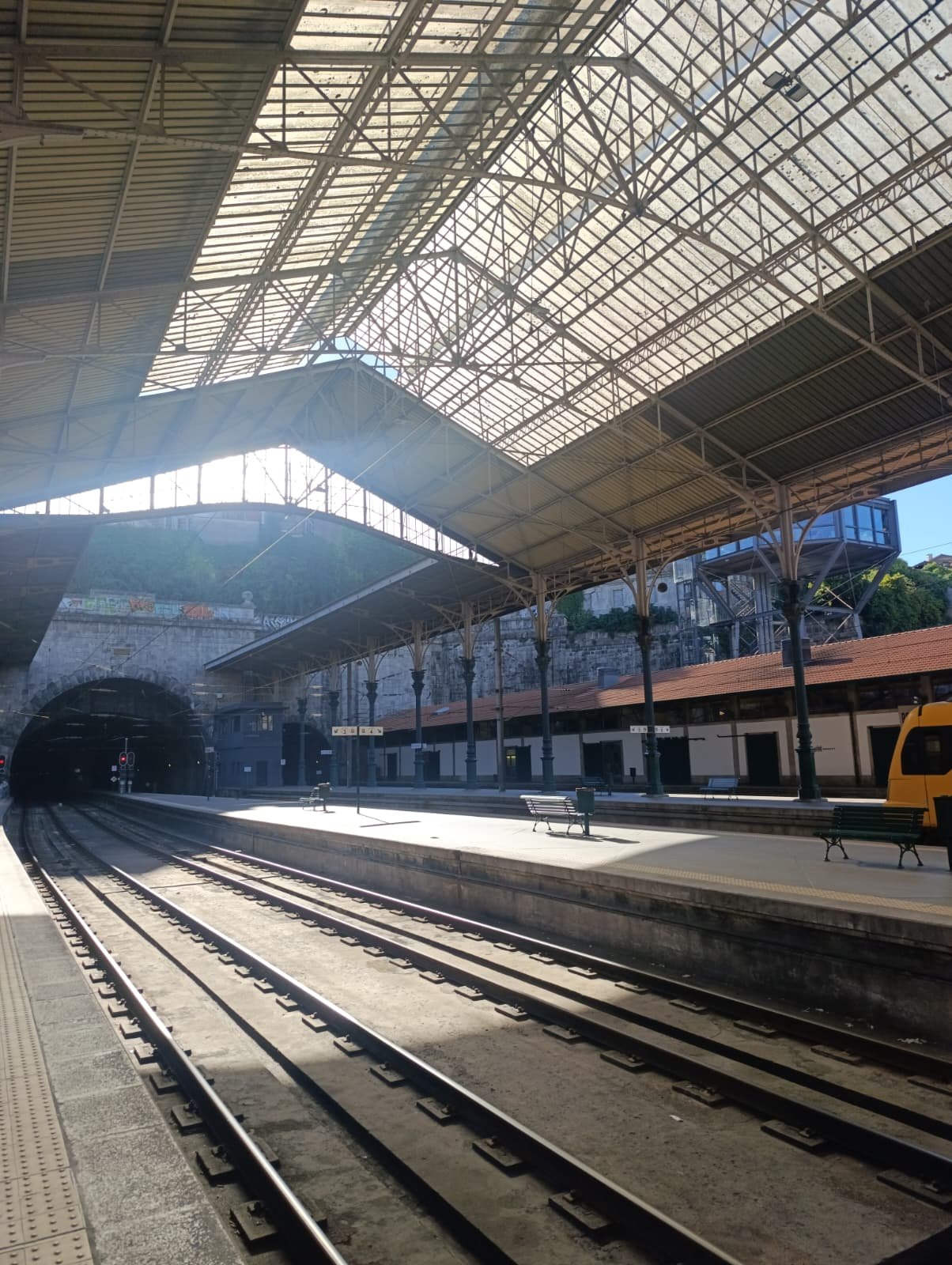
Railway platforms during our journey north.
I described Porto in a message home as a northern city and compared it to Ankara. That was my shortcut for explaining another major city beyond the capital. It was not a claim that the two cities look or work alike. Porto has its own character and its own relationship with the Douro. The river and red roofs were worth stopping for.
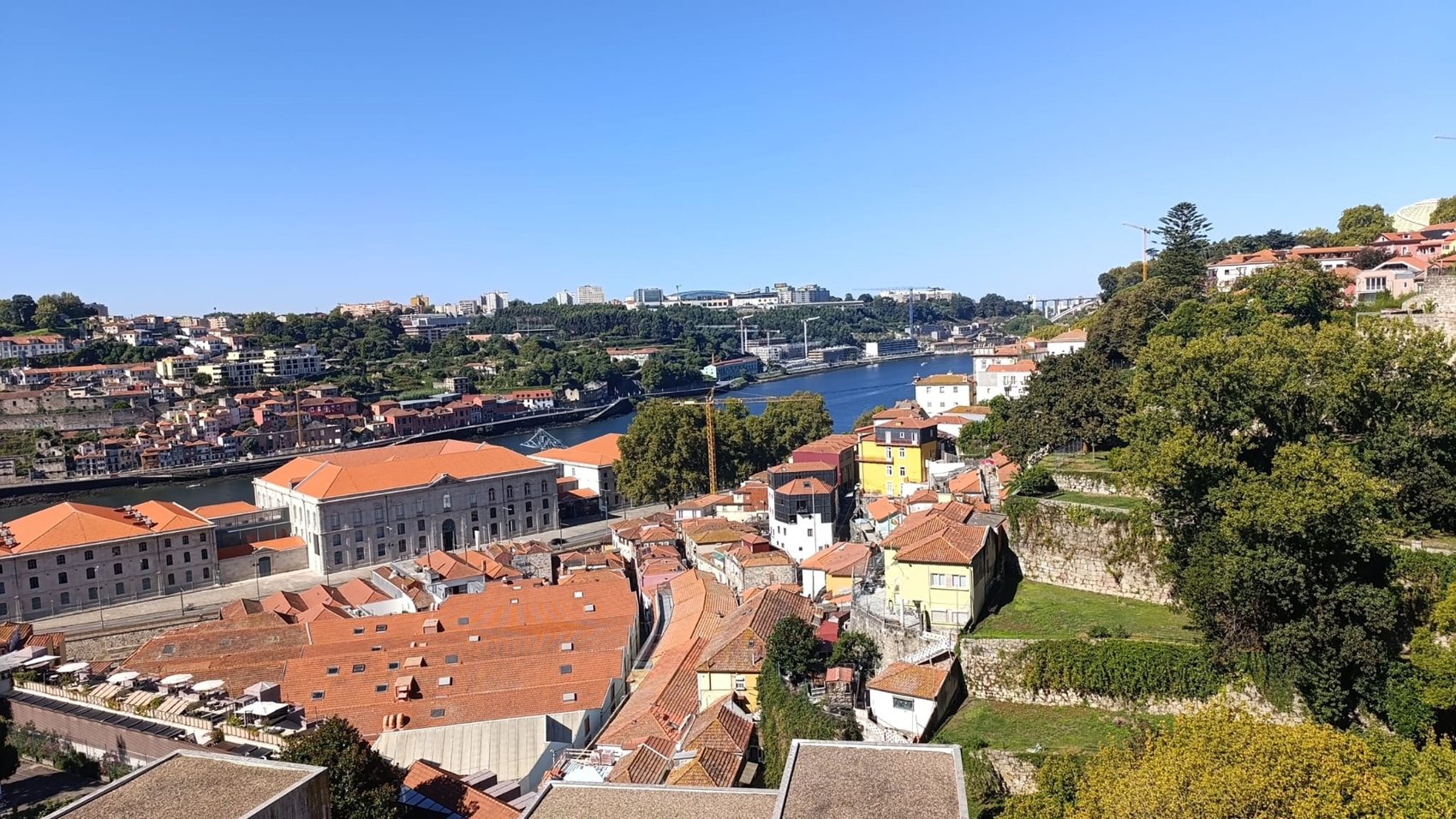
Porto from above, with the Douro running through the view.
A short excursion also makes the trade-offs visible. Leaving early and coming back in the evening gives you more hours in transit, but lets you see another city without adding a night’s accommodation. I cannot reconstruct the exact cost from the photographs. What I remember is that the journey itself became part of the holiday.
Belém brought together several parts of the trip. A café near the Jerónimos Monastery, the pale stone outside, the interior architecture and the ships at Museu de Marinha. The monastery looks different when you stop looking at the whole façade and start following the carving around a doorway.
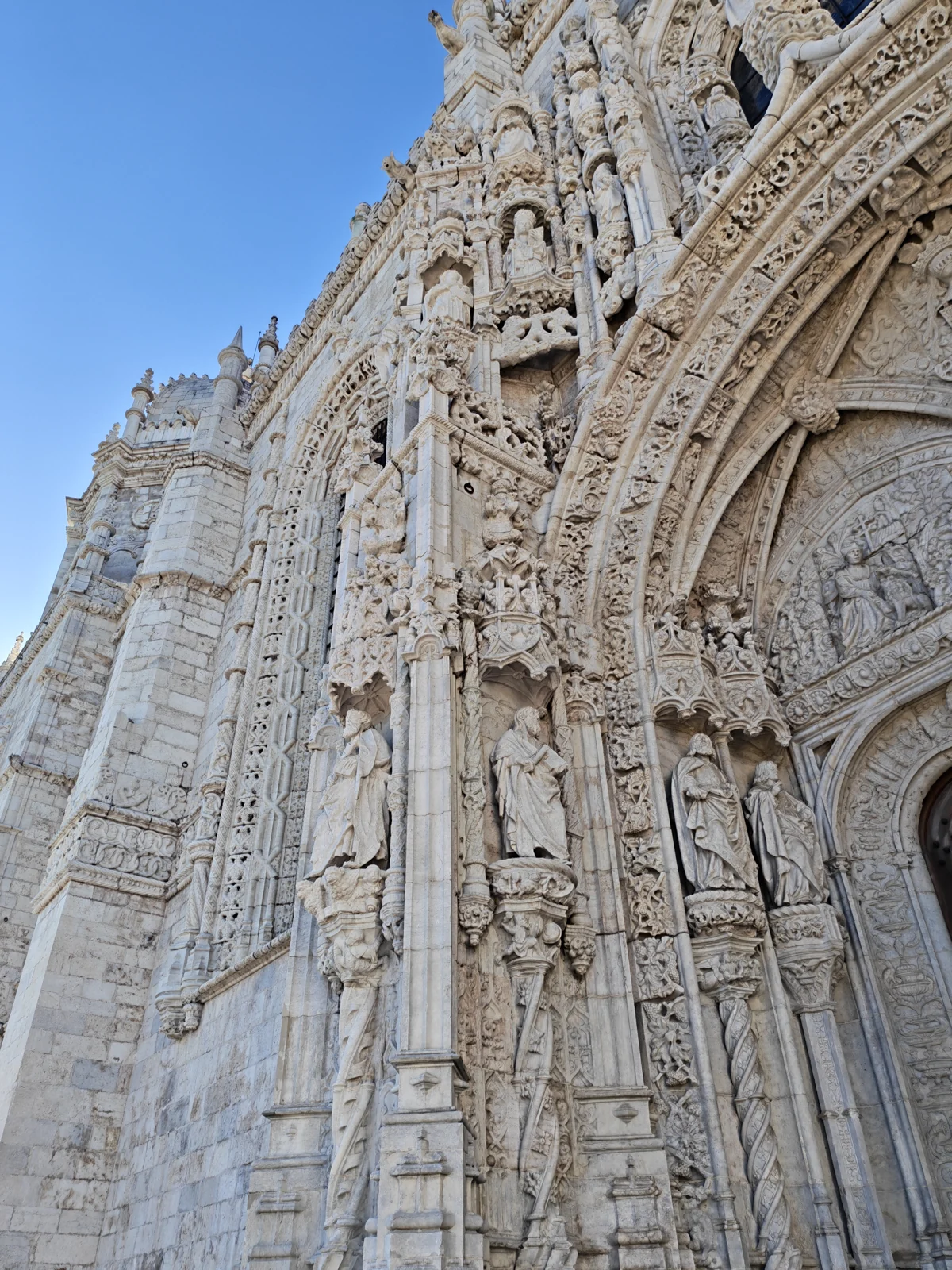
The portal at Jerónimos. Figures, arches and carved stone cover the façade.
Inside, the columns spread into the ribbed vaults overhead. The photograph gives the building another scale. Outside, I was looking at a monument across an open space. Here, the structure itself fills the view. UNESCO describes Jerónimos as an outstanding example of Manueline art , with construction beginning in 1502 under Manuel I.
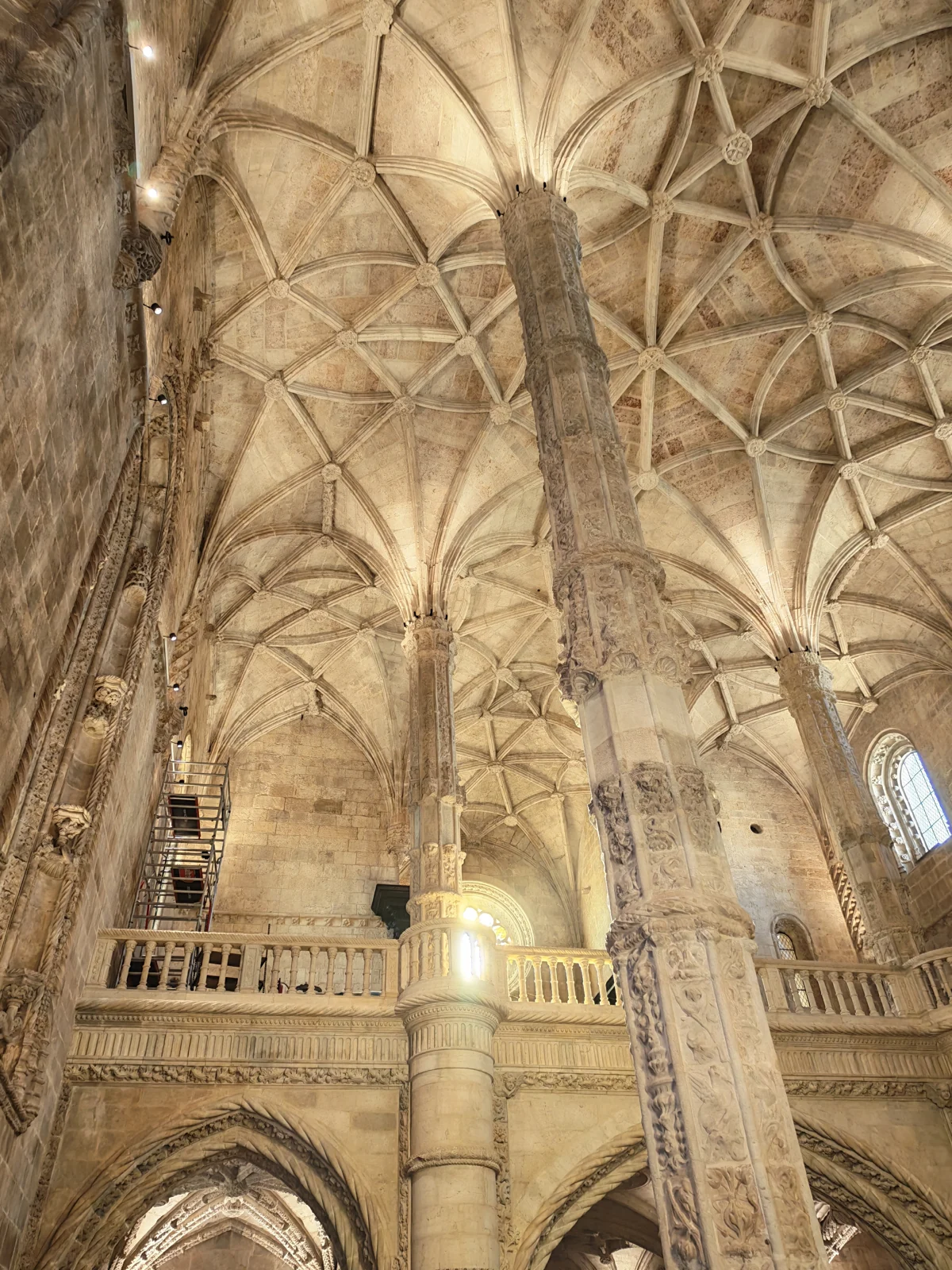
The ribbed vaults inside the church at Jerónimos.
Looking at that work, I kept coming back to the resources behind it. Materials, skills, labour and wealth had to be brought together to produce a building like this. Its beauty and its economic history belong in the same conversation.
The maritime museum made that history more concrete. Ships, models and maps show the craftsmanship and navigational knowledge involved in connecting distant places. From the fifteenth century, Portuguese voyages expanded along the African coast, into the Indian Ocean and across the Atlantic. Vasco da Gama reached India by sea in 1498. Trade in valuable goods depended on ships, ports, finance and state power.
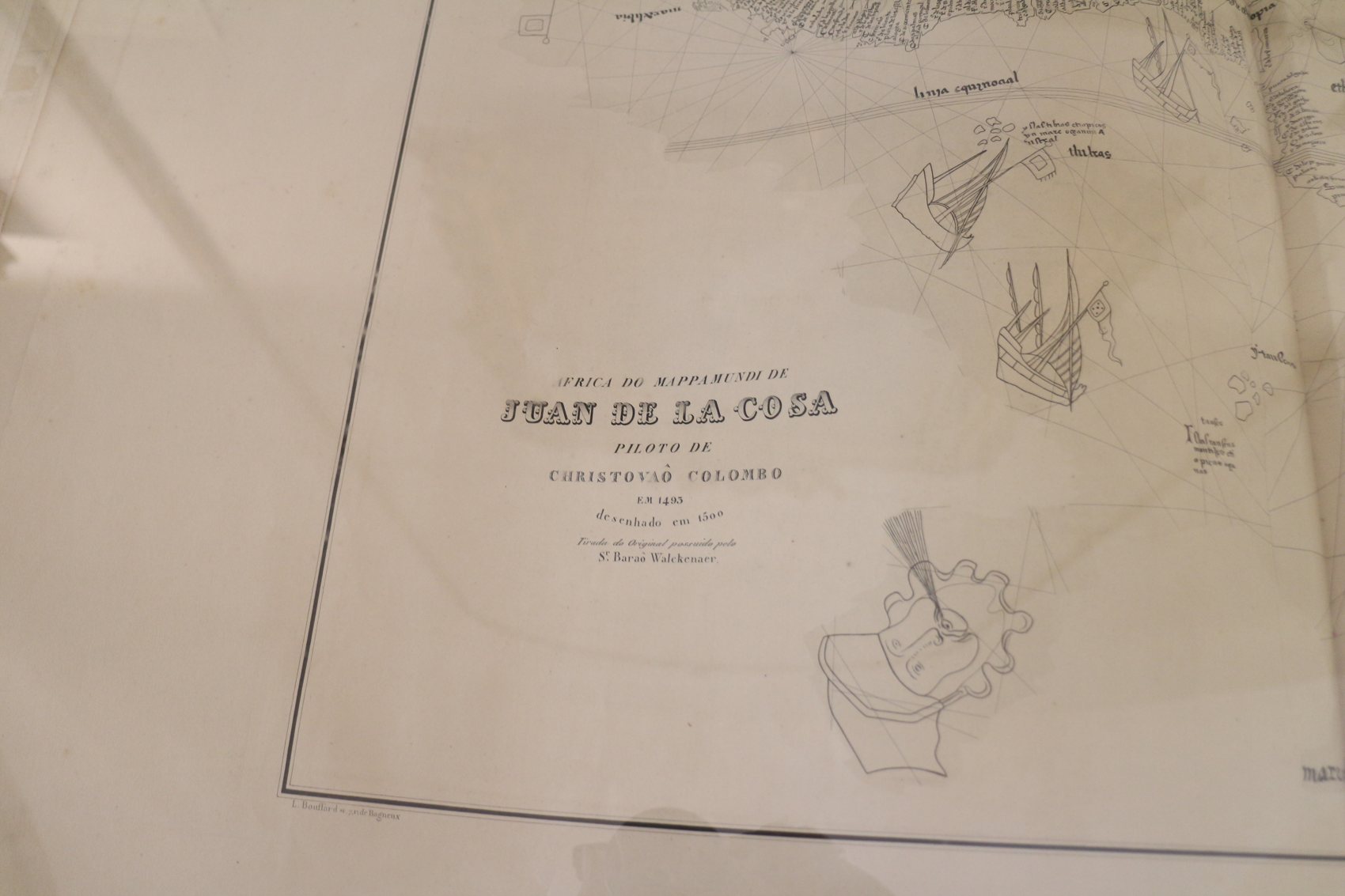
A historical map at the maritime museum.
Those connections were deeply unequal. Portuguese expansion involved conquest, colonial rule and the enslavement and trafficking of Africans, particularly to Brazil. Indigenous peoples also suffered dispossession and violence. A history of maritime wealth has to account for the people who bore its costs.
Jerónimos belongs to the period of overseas expansion and the wealth associated with it. I can admire the stonework and still ask where the resources came from. In the same way, the beauty of the museum’s vessels does not settle the question of how ships were used or who benefited from the routes they travelled.
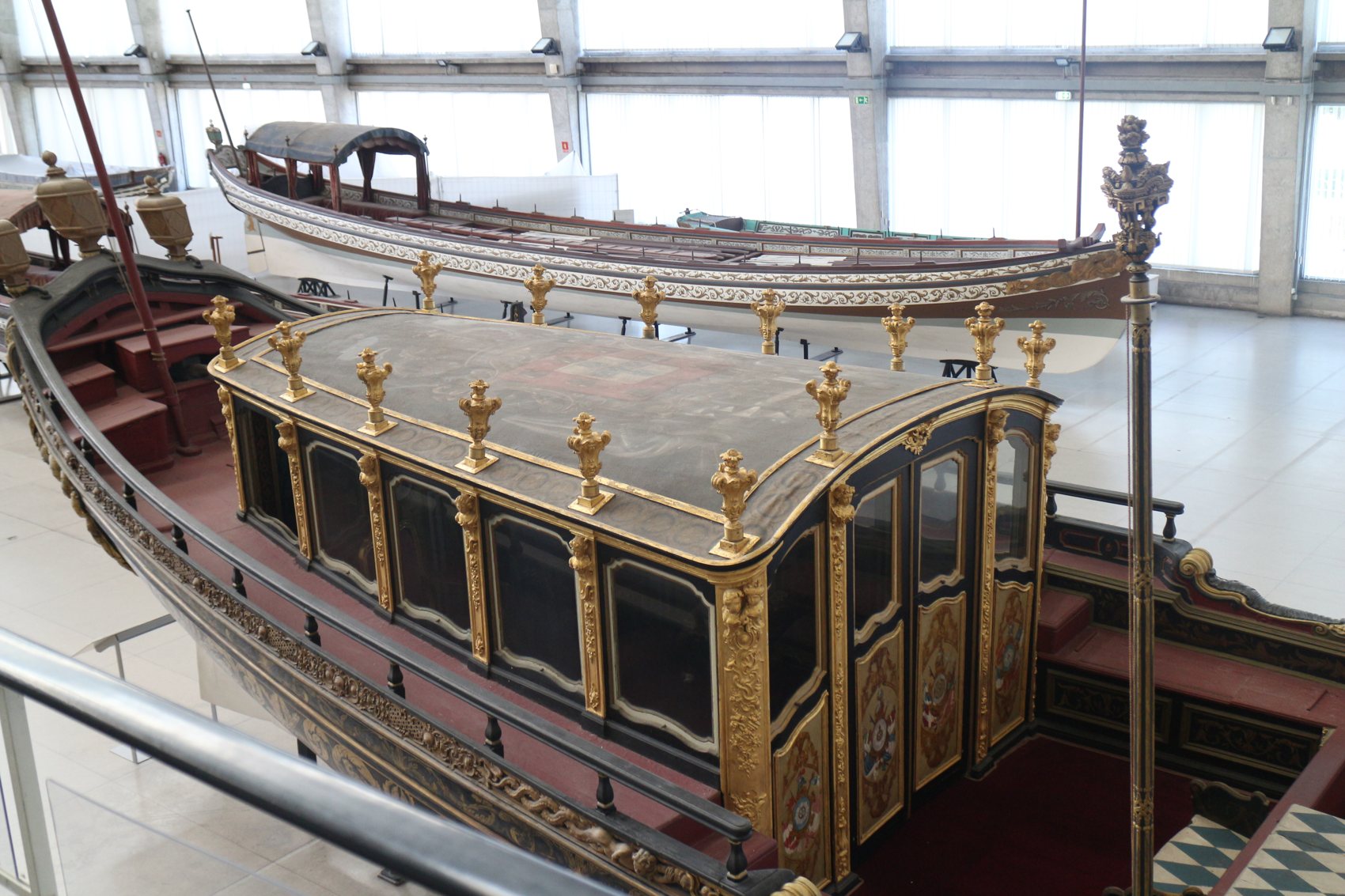
Craftsmanship on display at Museu de Marinha.
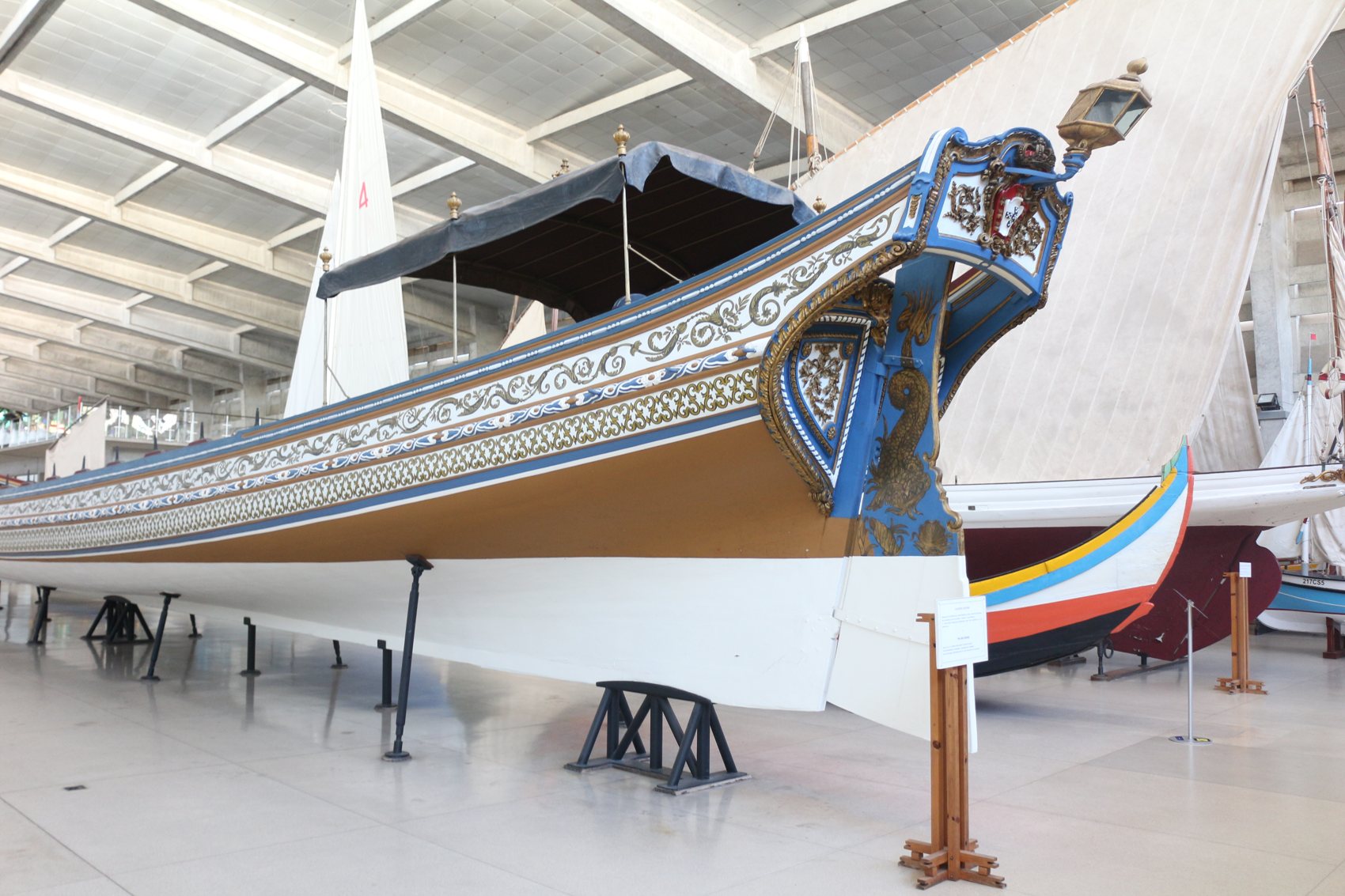
A closer view of one of the museum’s vessels.
The Padrão dos Descobrimentos offers another way of looking at how this history is remembered. The figures along its side turn seafaring into a public monument. Put beside the museum displays and the monastery, it raises a question I find interesting. Which parts of economic history become landmarks, and which parts need more effort to see?
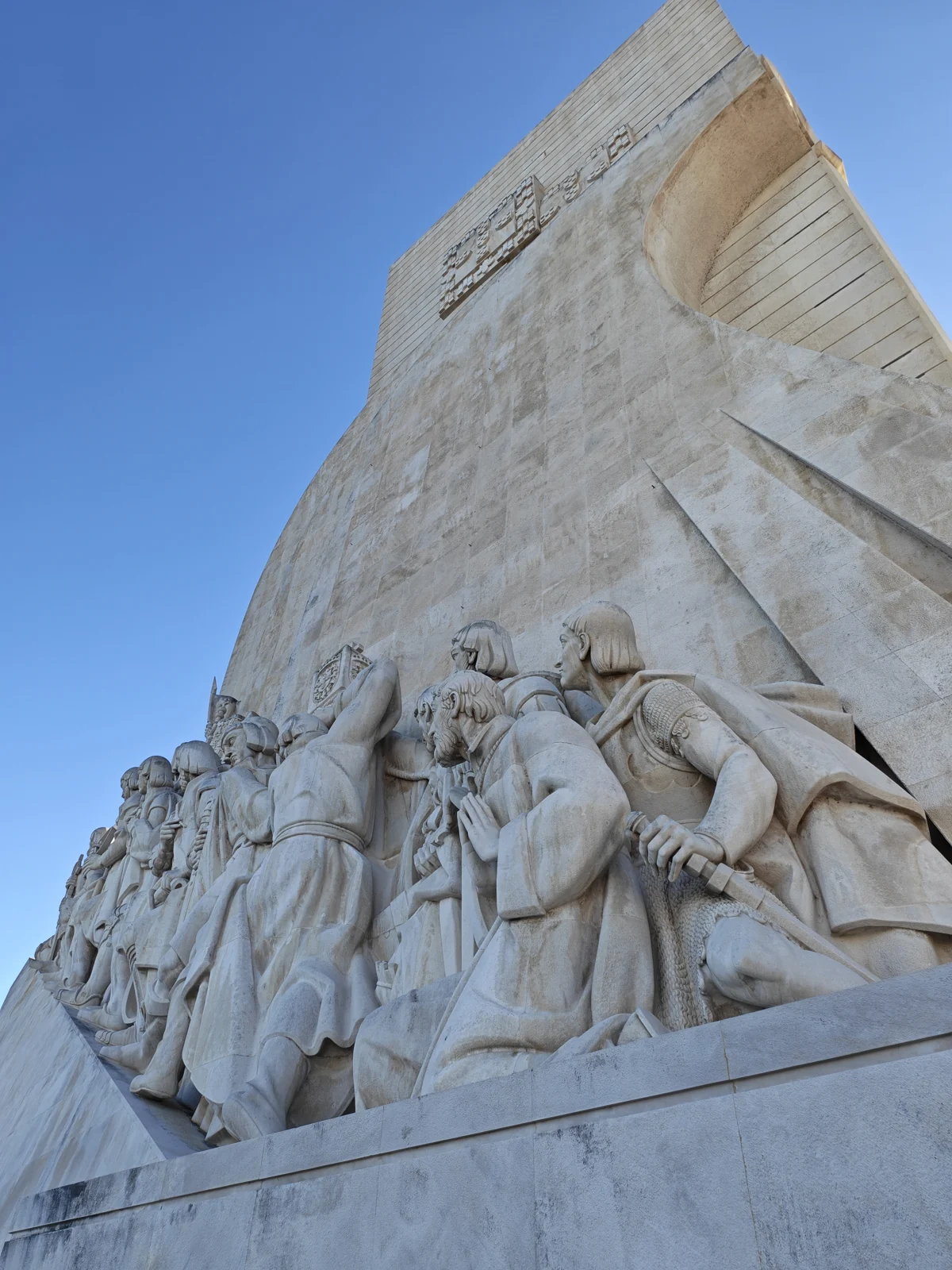
The Padrão dos Descobrimentos in Belém, seen from below.
English helped us in many places, though communication was sometimes harder. I remember it as a small negotiation using the words we had, gestures and patience. A translation app helps. So does being willing to slow down and try again.
Language has a practical cost too. Ordering food, understanding a ticket or asking for directions can take longer when people do not share a language. Learning a few Portuguese phrases is a small courtesy that makes those encounters easier. I do not want to arrive somewhere expecting everyone else to do all the work of understanding me.
If I planned the journey again, I would still leave time for the famous places. I would also protect time for the ordinary ones. A café, a supermarket and a bus ride gave me plenty to think about. I would check transport and admission details, find a cultural programme and make sure my phone connection worked before leaving.
The most useful travel budget is one that helps me decide what matters and understand the trade-offs. Our photographs hold a monastery and a supermarket, a concert and a petrol sign, Porto’s river and the hours spent getting there. Money was part of all of it. So were time, energy and attention.
And at the end of all the economic observations, there is something I cannot put into a spreadsheet. I shared these walks, bus rides, meals, views and music with my girlfriend. Having her beside me made the whole experience more joyful. It was so much more joyful with the meaning of my life!
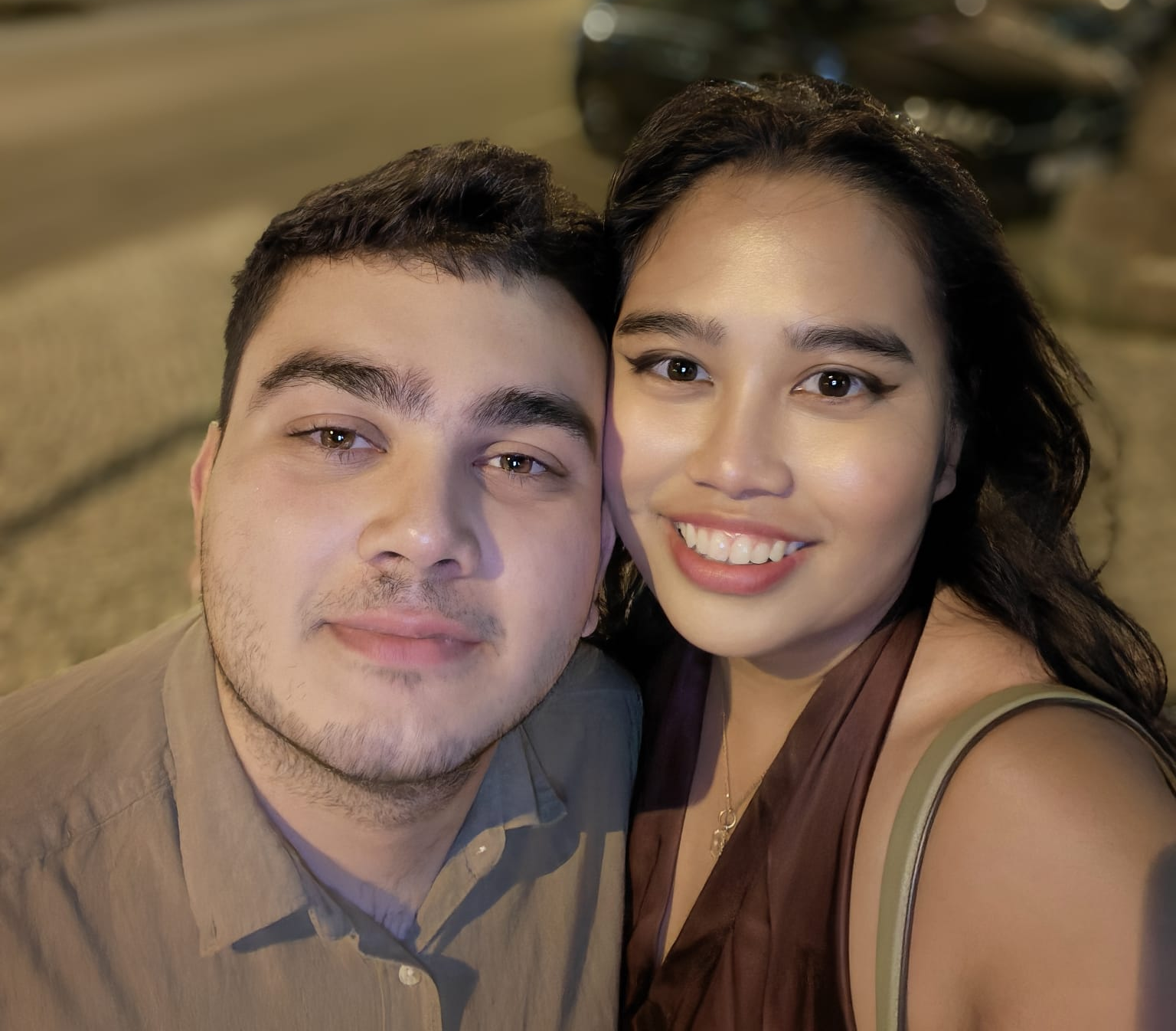
Together in Lisbon. One of my favourite memories from the trip.